


Category
Conducting

There are a number of differences in how I approach conducting a choir as opposed to how I approach conducting an orchestra in the studio. You usually only get a single session to record the choir for a whole score, so here are some tips to get everything you need. You need to emoteWhile I have said I do minimal gestures and stay out of the way with the orchestra, leading a choir is very different. I have found you get the best results when you…
Read More

Technique99% of what we do is on click track. We are also sight reading. The most important thing is to have a clear downbeat. That is what the players look for when their heads are buried in their stands. I try to do a very clear pattern, a tiny bit ahead of the click (and I mean tiny, not like the concert hall). Never conduct 'along' with the click. It is possible to make them play behind or a little in front by adjusting where…
Read More

That was great, now lets make it betterThere is nothing like working with the greatest sight readers on the planet. But even if they get every note right on the first run, the magic is not going to be there yet. My theory is that it takes at least three runs before the real magic happens, when the orchestra gets the correct tuning, timing and balance. For my example let's assume this is an easy-to-medium difficulty cue. Harder cues would take more time, but this…
Read More

DownbeatThe session starts, and the contractor will come out to announce the project, introduce the composer, and maybe also introduce the director or anyone else important. They sometimes say a few words, and then we are off. After the group tunes, I call the first cue. It is important to call out any version numbers, as sometimes we have more than one version of a cue. I will say it a bunch of times to make sure that everyone knows. I will explain the divisi…
Read More

Introduction and Score Preparation When I give lectures, one question I get asked a lot is "What is the difference between conducting for a concert vs. conducting in the studio?" It is much easier to say what is the same. The conductor is the leader. Whether recording or performing live, the conductor's job is to beat time and cue people. That is about where the similarities end, however! In a concert hall scenario the music has usually been played many times before and the players…
Read More
When I started working on large orchestral scores, the string section sizes were pretty standard, and similar to the concert hall where each lower section shrinks by two players. So for example, a standard orchestra might be 14 first violins, 12 seconds, 10 violas, 8 cello and 6 basses, or "14/12/10/8/6" for short (in the film world where we lump all the violins together, so this is often condensed further to "26/10/8/6"). After many years of orchestrating, conducting, and recording orchestras I have come to the…
Read More
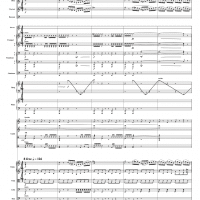
Scores should look good and be easy to read. I cannot tell you the number of times I have been sent scores by students or hopeful orchestrators using terrible layouts. Perhaps they saw something online (never trust anything you see online, unless it is on this site of course!) or got advice from a friend who had a friend that went to Berkusc or UCLNYU! Session scores are different from concert scores for several reasons. While concert scores have been typeset for centuries, session scores…
Read More
