


Category
Orchestration

Have been in the studio a lot recently. The Internship and R.I.P.D. for Chris Beck and a session for Harold Kloser and Thomas Wander for White House Down. The Paperman, for which I conducted Beck's score, won the Oscar for Best Animated Short.
Read More
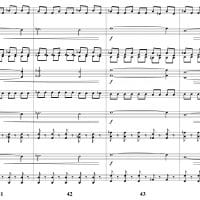
One would think that if you want to make a small string section sound bigger, you could just record it twice and the sound will double. Unfortunately, this does not work too well. There will be a tinny or fuzzy sheen to the sound. Listen to the strings on Coldplay and Christina Aguilera songs and you will hear what I mean. Even though there are two separate takes, players have a unique talent for being able to play the same phrase pretty much the same…
Read More

Hard to believe that I originally made this video in 2013 and it is now 2022! While several things have changed since I made the video below, my process is still the same, so it is still relevant to anyone interested in film orchestration. "What has changed?" I hear you ask. The main thing is that I now use Keyboard Maestro for all my shortcuts instead of Quickeys, which stopped being updated a few years ago. At first I was disappointed with…
Read More

When I started working on large orchestral scores, the string section sizes were pretty standard, and similar to the concert hall where each lower section shrinks by two players. So for example, a standard orchestra might be 14 first violins, 12 seconds, 10 violas, 8 cello and 6 basses, or "14/12/10/8/6" for short (in the film world where we lump all the violins together, so this is often condensed further to "26/10/8/6"). After many years of orchestrating, conducting, and recording orchestras I have come to the…
Read More
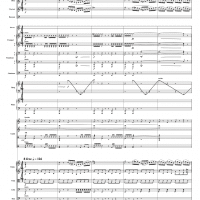
Scores should look good and be easy to read. I cannot tell you the number of times I have been sent scores by students or hopeful orchestrators using terrible layouts. Perhaps they saw something online (never trust anything you see online, unless it is on this site of course!) or got advice from a friend who had a friend that went to Berkusc or UCLNYU! Session scores are different from concert scores for several reasons. While concert scores have been typeset for centuries, session scores…
Read More
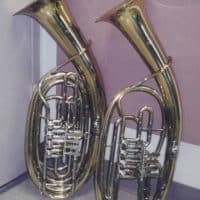
Like the cimbasso, the Wagner tuba is a mystery to a lot of orchestrators. Wagner tubas are also often referred to as tuben. This is just the plural of tuba in German. First of all, some quick history; but as that is not my strong point, I will let someone else explain it. Here is studio legend Jim Thatcher talking about the instrument. Wagner Tuba vs the Horn The main physical difference, and the reason for the sonic difference between the two, is the bell.…
Read More
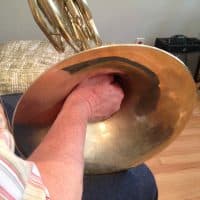
From longing, to sinister, to epic, the sounds of the horn are incredibly diverse. There are so many different colors that the horn is capable of, but not many people understand the physics of the instrument and what the player does to make all those cool sounds. The texts have not done a great job of explaining it. There are links to my chat with Jim Thatcher throughout, however the whole video is posted at the bottom of the page. The Instrument Size mattersThere…
Read More
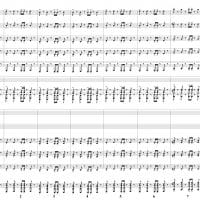
A common device that I see a lot of is 'stagger breathing', and I have some problems with it! Not the concept itself, just the way it is carried out. I often see a stream of notes in a woodwind part, perhaps copied and pasted from the violin part, and the words, 'stagger breathe' or 'breathe when necessary'. The latter I find particularly humorous, as they really have no choice. Even the world's most intelligent flute players have no way of knowing the best way…
Read More

There are three techniques where real world sounds and possibilities are easily misrepresented in the sampled world. They are In touch with, Tremolo, and Pizzicato. Pizzicato is the technique where the player plucks the string with their finger. The loudest pizzicato is really only equivalent to a mezzo forte with the bow. Many a person has done a mockup with forte pizz balanced against arco strings and brass, and when we get to the studio they wonder why it sounds so different. The sound of…
Read More
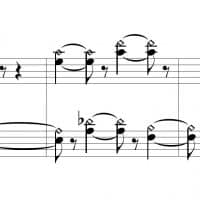
I snapped, I have had enough, I have mostly given up on trying to record harmonics on sessions. Like you'll see in the discussion below, it is really hard. Also, due to the nature of what people write for harmonics, the samples actually work really well, better than humans in most cases. But I found a middle ground. It came about on a session where the players could not get it in tune to my ears, but to them it was all good.…
Read More
